
How mitochondria work:
a. Energy production; b. Oxidative stress; c. Epigenetics; d. Endosymbiosis (membranes)

Mitochondrial biology maintains brain physiology. Mitochondria are the powerhouses and generate ATP through key processes in the metabolism of glucose, fatty acids, and amino acids.
Endosymbiosis

Lynn Margulis demonstrated that endosymbiotic events played a fundamental role in the origin and evolution of eukaryotic cells.
Journal of TheoreticalBiology em 1967. https://www.sciencedirect.com/science/article/abs/pii/S0022519317303223
The invention of super-resolution microscopy marked a leap forward in the life sciences. Living organisms could be observed with unprecedented resolution.

Continuous mitochondrial intracellular network structures visualized with high-resolution field emission scanning electron microscopy.
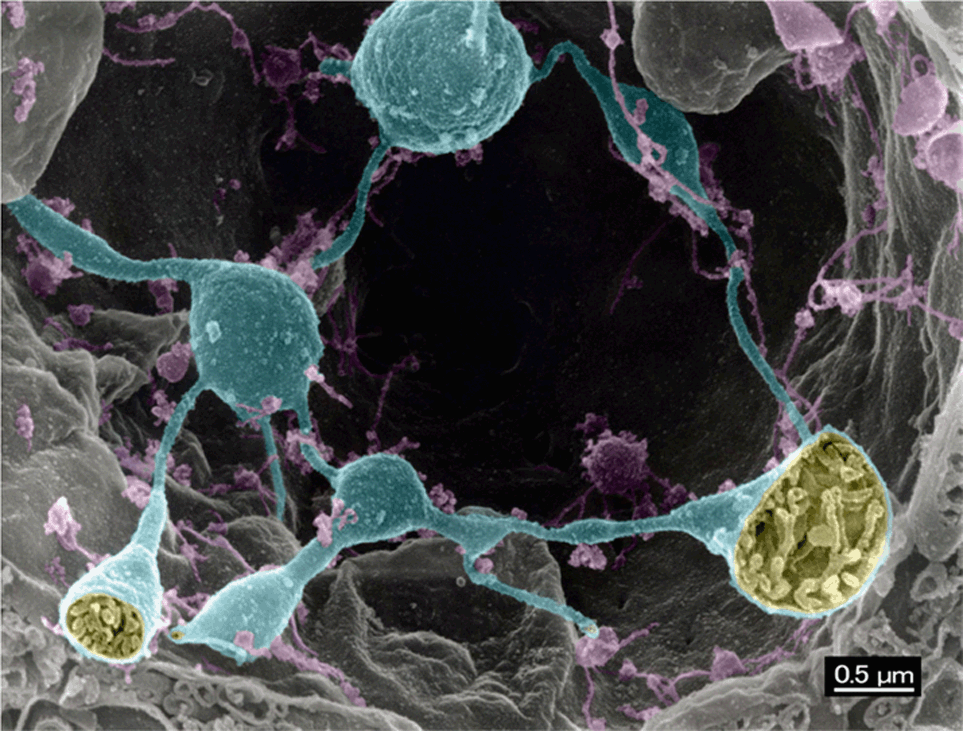

Endosymbiosis

On the one hand, metabolic alterations disrupt the interaction between mitochondria and other organelles, and on the other hand, a deficiency in proteins involved in the connection between mitochondria and the endoplasmic reticulum (ER) or in specific functions of the interaction leads to metabolic alterations in various tissues;https://www.embopress.org/doi/full/10.15252/embr.201947928.